Search “Minya population” and you’ll get three different answers on the first page — 298,000, 327,000, and 6.4 million — all technically correct. The catch is that they’re answering three different questions. Here’s the number you actually need, plus the full picture behind it.
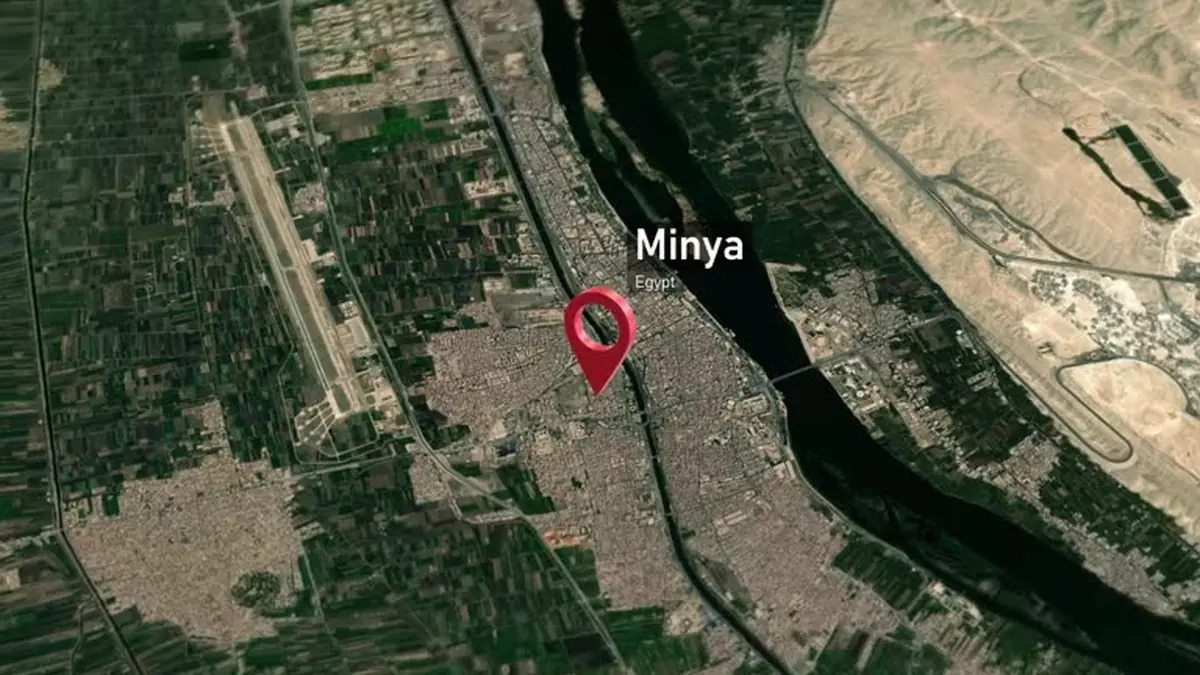
Minya city, the capital of Minya Governorate on the Nile’s left bank in Upper Egypt, has a population of roughly 298,000 as of the most recent city-level count, though newer estimates put it closer to 320,000–340,000 by 2026.The city covers 15.0 square kilometers and had a density of about 19,900 people per square kilometer as of 2023 data. Minya Governorate — the much larger administrative region the city sits inside — is home to roughly 6.45 million people as of January 2024, spread across 32,279 square kilometers.
What Is Minya’s Population Right Now?
If someone asks “what’s the population of Minya,” the honest answer depends on which Minya they mean.
The city of Minya itself had 298,021 residents as of the 2023 count, making it a mid-sized Upper Egyptian city — smaller than Asyut or Sohag, but the administrative and commercial anchor for a much larger surrounding region. Independent projection models that track annual growth put the 2026 figure meaningfully higher: one widely cited estimate puts Al-Minya’s 2026 population at around 327,611, up from 201,440 in 1996, a roughly 3.2% annual increase in the most recent year measured. A separate projection built from the CAPMAS growth trend for 2006–2012 arrives at a similar ballpark, estimating the city’s population at around 322,947 by 2025 using a growth rate near 1.66% per year.
The spread between these numbers — roughly 298,000 to 340,000 — comes down to methodology, not disagreement about reality. Official census counts lag behind by several years; growth-rate projections fill the gap but use different base years and assumptions.
Quick takeaway: For the city proper, treat “around 300,000–330,000” as the accurate working range for 2026. Anyone quoting a single precise figure without a date attached is oversimplifying.
City vs. Governorate — Why the Numbers Don’t Match
This is the part almost every other page on this topic skips, and it’s the single biggest source of confusion.
Minya Governorate is an administrative region roughly the size of Belgium — 32,279 square kilometers, with a total population of 6,453,892 as of January 2024. That figure includes not just Minya city but eight other major districts (markazes), dozens of towns, and thousands of villages strung along both banks of the Nile.
Minya city is just the capital seat of that governorate — one urban center out of many, home to under 5% of the governorate’s total population. When a travel site or a quick AI answer says “Minya has 4 million people,” it’s usually rounding the governorate number down and applying it to the city by mistake, or vice versa.
Think of it the way you’d think of “Cairo” — sometimes that means Cairo Governorate (over 10 million), sometimes it means the city core. Minya works the same way, just at a smaller scale.
Minya’s Population Growth Over Time
Minya’s population — city and governorate alike — has grown steadily for decades, though the rate has slowed as Egypt’s national fertility rate has declined.
Historical annual growth rates for the city, by period, look like this: 2.5% per year from 1947–1976, 2.03% from 1976–1986, 1.18% from 1986–1996, 1.6% from 1996–2006, and 1.66% from 2006–2012. That’s a long, gradual deceleration from the postwar boom years down to a steadier pace — typical of Upper Egyptian cities as rural-to-urban migration patterns shifted and family sizes shrank.
At the governorate level, growth has stayed strong on raw numbers even as the rate slows, simply because the base population is so much larger. The governorate moved from roughly 6.28 million residents in January 2023 to 6.45 million by January 2024 — an increase of about 175,000 people in a single year, driven mostly by natural growth rather than migration into the region.
Population by District (The 9 Markazes)
Minya Governorate isn’t one homogenous block — it’s split into nine markazes (districts): Al-Minya, Mallawi, Samalut, Beni Mazar, Maghagha, Deir Mawas, Abu Qirqas, Al-Idwa, and Matay, each functioning as its own local government and economic hub along the Nile.
A few of the better-documented districts:
| District (Markaz) | Notable Town Population | Notes |
|---|---|---|
| Al-Minya | ~298,000–330,000 (city) | Governorate capital |
| Beni Mazar | 731,649 (2023, town + surrounding area) | Second-largest population center in the governorate |
| Abu Qirqas | 94,855 (2023) | Known for its sugar-processing industry |
| New Minya | 18,357 (2023) | A planned satellite city east of the capital |
| Mallawi, Samalut, Maghagha, Deir Mawas, Al-Idwa | Not consistently published at the city level | Predominantly rural markazes along the Nile |
The pattern that jumps out: several “district towns” that most people have never heard of, like Beni Mazar, are more populous than the governorate capital itself once the surrounding markaz is counted — because Minya Governorate is overwhelmingly rural, and markaz populations include the countryside around each town, not just the urban core.
Population Density and Land Area
Density tells a different story than raw population, and it’s where the city-versus-governorate split matters most.
- Minya city: 15.0 km² with a density of roughly 19,900 people per square kilometer — dense, compact, and typical of an old Nile-bank city built long before modern urban planning.
- Minya Governorate overall: 32,279 km² with an average density of just 199.94 people per square kilometer — a fraction of the city’s density, because most of the governorate’s land area is desert and agricultural floodplain rather than settled urban space.
That roughly 100x gap between city and governorate density is normal for Egypt as a whole: nearly everyone lives in a thin ribbon along the Nile, while the vast majority of the land — desert on both sides — is essentially empty.
Demographics: Age, Urbanization, Religion, and Poverty
A few figures round out the picture beyond raw headcounts:
- Median age: Around 23.2 years for the wider Minya area — a young population, consistent with Upper Egypt’s higher birth rates relative to Cairo or Alexandria.
- Urbanization: As of a 2015 estimate, only about 18.9% of the governorate’s population lived in urban areas, with roughly 4.68 million living rurally against under 1 million in towns and cities — making Minya one of the most rural governorates in Egypt.
- HDI: The governorate’s Human Development Index stood at 0.690 (medium) in 2021, ranking 20th among Egypt’s governorates.
- Poverty: More than 60% of the governorate’s population lives below the poverty line, among the highest rates in the country, which has prompted expanded social safety-net programs coordinated with Egypt’s Ministry of Finance in recent years.
- Religion: Minya is home to one of Egypt’s largest Coptic Christian communities outside Cairo, with local estimates suggesting a significant minority-to-near-parity Christian population in parts of the governorate — though no recent official census breaks this down at the governorate level.
Quick takeaway: Minya is young, overwhelmingly rural, and economically among the more disadvantaged regions of Egypt — context that most population-only listicles leave out entirely.
Population Projections Through 2030
Extending current growth trends, Minya city is likely to cross the 350,000 mark by 2028–2030 if the roughly 3% annual growth rate observed in recent projections holds. At the governorate level, a more conservative 1.5–2% annual rate would put the total population somewhere between 6.9 and 7.2 million by 2030.
These are trend-based estimates, not official CAPMAS projections — Egypt’s next full census will be the figure to watch for a definitive update, since growth rates for Upper Egyptian governorates have historically been revised downward as fertility rates continue to decline nationally.
FAQ Section
Q1: What is the population of Minya?
It depends on which Minya you mean. Minya city has around 298,000–330,000 residents as of the mid-2020s. Minya Governorate, the larger administrative region, has about 6.45 million people as of early 2024.
Q2: Is Minya a city or a governorate?
Both — Minya is the name of a city and also the governorate it belongs to. The city is the governorate’s capital, but the governorate itself contains eight other districts and millions more people beyond the city limits.
Q3: What is Minya Governorate’s population density?
About 200 people per square kilometer on average, though this is misleading — the population is concentrated in a narrow strip along the Nile, while most of the governorate’s desert land is nearly uninhabited.
Q4: How many districts does Minya Governorate have?
Nine markazes: Al-Minya, Mallawi, Samalut, Beni Mazar, Maghagha, Deir Mawas, Abu Qirqas, Al-Idwa, and Matay.
Q5: Is Minya’s population growing?
Yes. Both the city and governorate have grown steadily for decades, though the annual growth rate has slowed from over 2.5% in the mid-20th century to roughly 1.5–3% in recent years, depending on the source and area measured.
Q6: Why do population figures for Minya vary so much between websites?
Most discrepancies come from conflating city and governorate figures, using different census base years, or applying growth-rate projections instead of actual counts. Always check whether a figure refers to the city or the full governorate.
Q7: What percentage of Minya Governorate is urban?
Roughly 19%, based on the most recent widely cited estimate — making it one of Egypt’s most rural governorates, with the large majority of residents living in villages and agricultural areas rather than towns.
Q8: What is Minya’s Human Development Index (HDI)?
0.690 as of 2021, classified as “medium” and ranking 20th among Egypt’s 27 governorates.